Proposal to payment: how to get paid faster without nagging

Ask a few service business owners what keeps them up at night and you will often hear the same answer: not finding work, but collecting payment for work already done. Late invoices squeeze cash flow, create awkward conversations and quietly poison good client relationships.
The good news is that most payment delays are decided long before the invoice goes out. They are decided in the proposal, in the terms and in how you follow up. Here is a practical path from “yes” to “paid”.
1. Write a proposal that is easy to approve
A client who cannot quickly explain your proposal to their boss will not approve it quickly. Make it easy to forward:
- A one-paragraph summary at the top that states the problem, the outcome and the price.
- Clear scope, with what is included and, just as important, what is not.
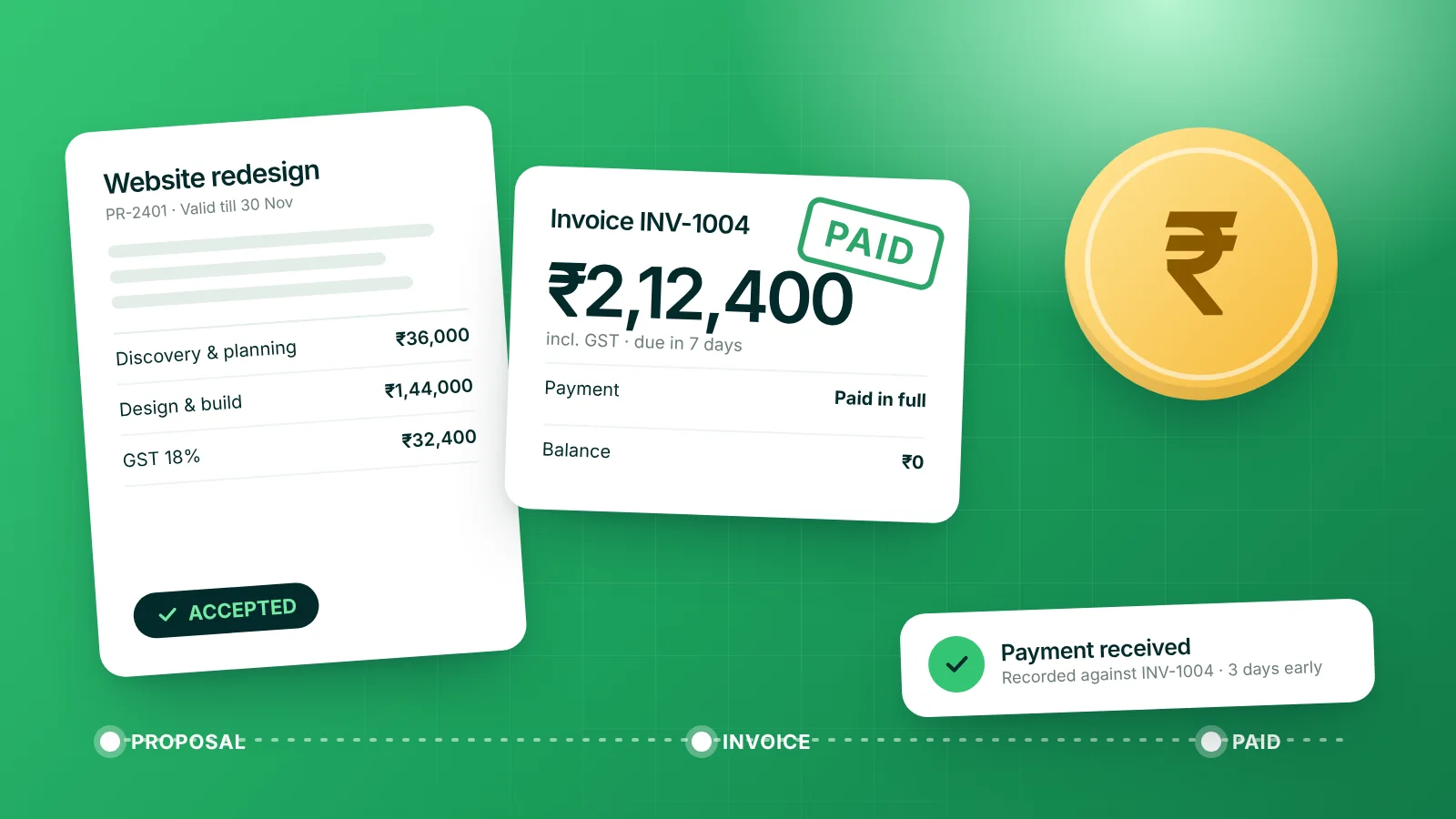
- A simple price table with quantities, rates and the GST shown separately.
- A validity date, so a decision has a natural deadline.
- One next step, such as “Reply to accept and we will send the first invoice”.
Keep prices consistent by pulling them from a catalogue instead of typing them from memory. In Worthit AI, proposals are built from your catalogue and templates and exported as a branded PDF, so two people quoting the same service quote the same number.
2. Agree the payment terms before work starts
The easiest time to talk about money is before there is any work to argue about. Put the payment terms inside the proposal, in plain words:
- An advance on acceptance, for example 40%.
- Milestone payments tied to deliverables rather than dates.
- A due period on each invoice, such as 7 or 15 days.
- What happens when a payment is late, for example work pauses until it is cleared.
3. Invoice the day the milestone is done
Every day between delivery and invoice is a day the client forgets how happy they were. Send the invoice while the good feeling is fresh, and attach the work that justifies it.
Check that each invoice has what your accountant needs. For GST invoices that usually means your GSTIN, the client’s details, a description with the right SAC code, the taxable value, the GST rate and amount, and the place of supply. This is general guidance and not tax advice, so confirm the exact requirements with your accountant.
In Worthit AI an invoice carries a GST percentage, supports part payments and always shows the balance still due, so a client who pays half does not leave you guessing.
4. Use a reminder rhythm that stays friendly
Chasing feels rude only when it is improvised. A fixed rhythm turns it into routine administration that clients expect:
- Two days before the due date: a short heads-up with the invoice attached.
- On the due date: a polite note with payment details.
- Three days after: a gentle reminder asking whether anything is blocking payment.
- Seven days after: a clear message that references your terms.
- Fourteen days after: a phone call. Voices solve what emails cannot.
Hi {first name}, I hope the project is going well on your side. This is a quick note that invoice {number} for {balance} was due on {date}.
If it has already been processed, thank you, and please ignore this message. If something is holding it up, such as a purchase order or a missing detail, tell me and I will sort it out today.
You do not have to write these from scratch. On the Invoices screen, Worthit AI can draft a reminder for every overdue invoice in one go. You read each draft, edit it if you like and send it, so the tone stays yours.
5. Watch booked, invoiced and collected separately
A single revenue number hides the problem. Track three:
- Booked: deals you have won.
- Invoiced: work you have billed.
- Collected: cash that has actually arrived.
A big gap between booked and invoiced means delivery is slow to bill. A big gap between invoiced and collected means follow-up needs attention. The dashboard shows all three side by side, so you can see which gap to close first.
6. When a client is genuinely late
Pick up the phone, listen and agree a date. Most late payments are caused by internal approvals, not by unwillingness. Record the promise, then confirm it in writing: “Thanks for the call. As agreed, I will expect payment on {date}.” If the date passes, you now have a clear, calm basis to pause work as your terms allow.
Clear terms and a steady rhythm are kinder to clients than silence followed by a sudden demand.
A short checklist to keep
- Put payment terms in every proposal.
- Quote from a catalogue so prices stay consistent.
- Invoice the same day a milestone is done.
- Send reminders on a fixed rhythm, starting before the due date.
- Review booked, invoiced and collected every week.
Want proposals, invoices and reminders in one place? Start your free trial and send your first proposal today, or see pricing.